A PHP Error was encountered
Severity: Warning
Message: Undefined array key 0
Filename: views/newspaper.php
Line Number: 25
Backtrace:
File: /home1/checkam/news.checkam.info/application/views/newspaper.php
Line: 25
Function: _error_handler
File: /home1/checkam/news.checkam.info/application/controllers/Newspaper.php
Line: 614
Function: view
File: /home1/checkam/news.checkam.info/index.php
Line: 315
Function: require_once
A PHP Error was encountered
Severity: Warning
Message: Attempt to read property "name" on null
Filename: views/newspaper.php
Line Number: 25
Backtrace:
File: /home1/checkam/news.checkam.info/application/views/newspaper.php
Line: 25
Function: _error_handler
File: /home1/checkam/news.checkam.info/application/controllers/Newspaper.php
Line: 614
Function: view
File: /home1/checkam/news.checkam.info/index.php
Line: 315
Function: require_once
A PHP Error was encountered
Severity: Warning
Message: Undefined array key 0
Filename: views/newspaper.php
Line Number: 25
Backtrace:
File: /home1/checkam/news.checkam.info/application/views/newspaper.php
Line: 25
Function: _error_handler
File: /home1/checkam/news.checkam.info/application/controllers/Newspaper.php
Line: 614
Function: view
File: /home1/checkam/news.checkam.info/index.php
Line: 315
Function: require_once
A PHP Error was encountered
Severity: Warning
Message: Attempt to read property "name" on null
Filename: views/newspaper.php
Line Number: 25
Backtrace:
File: /home1/checkam/news.checkam.info/application/views/newspaper.php
Line: 25
Function: _error_handler
File: /home1/checkam/news.checkam.info/application/controllers/Newspaper.php
Line: 614
Function: view
File: /home1/checkam/news.checkam.info/index.php
Line: 315
Function: require_once
Motaze’s silent revolution at MINFI.
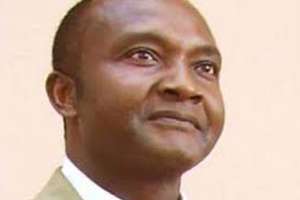
Motaze’s silent revolution at MINFI.
Financial spin-offs from his austerity reforms and 4th ECF review with IMF have hiked the budget from 4850 to 5112 billion, necessitating a revision of the 2019 finance law! (Photos of Motaze)
The Biya regime might be facing international opprobrium on the security front as a result of the escalating Anglophone crisis but it is scoring points in the areas of financial management and transparency.
The Cameroon government’s implementation of its three-year Economic Credit Facility with the IMF has it can still be trusted with managing funds put at its disposal to support its budgetary deficit.
So impressive has been its track record in this domain that the country is able to generate buffer funds to stem the tide of inflation and implement new projects.
The hike in revenue was witnessed recently during the 4th ECF review carried out by the International Monetary Fund, constraining the government to proceed to an amendment of the2019 Finance Law.
“The revised budget of Cameroon also provides for the speeding up of the implementation of ongoing externally funded investment projects, on the basis of a disbursement plan with well-defined priorities. Higher external support will allow for the restoration of budgetary flexibility and the payment of expenditure arrears that accumulated at the end of 2018,” said Corinne Deléchat who led the IMF mission.
The man at the origin of this surplus is none other than Louis Paul Motaze, minister of finance. Thanks to savings generated from the cleaning of the civil servants’ payroll; extra revenue from the customs and taxation departments; budgetary cuts from some administrations, the government would be able to organize elections, reduce its large stock of domestic arrears and continue implementation of some structural projects.
An explanatory note from the Ministry of Finance puts into context the order of the Head of State which slipped the budget of Cameroon from 4850.5 billion FCFA to 5212 billion FCFA.
During the preparation of the 2019 budget, several data were not yet available and had therefore not been taken into account. Five months after the launch of the budget year, the International Monetary Fund and the Cameroonian state have agreed to make some adjustments. The main objective here is to keep the deficit of the budget balance at 2%. The President of the Republic signed an ordinance on May 29 to amend and supplement certain provisions of the budget law for the current fiscal year. The explanatory note from the Ministry of Finance (Minfi) focuses on the source of the 361.5 billion FCFA added to the budget and on their destination.
Revenue
It should be noted at the outset that this increase in resources comes from an increase in oil revenue. Estimated at 475 billion FCFA, the presidential order adds 56 billion FCFA , raising the oil revenue to 531 billion FCFA. This is the result of an increase in production, which is itself fueled by the upward trend in world oil prices and the commissioning of off-shore platforms for natural gas production. Then we see that the tax burden goes from 13.4% to 13.5%. The updated projections have indeed increased tax revenue by 24.5 billion FCFA. Consequently, tax revenue will increase from 2899.5 to 2924 billion FCFA. According to Minfi, this change stems from the fact that "the tax revenue achievements at the end of 2018 were greater than those estimated at the time of the budget preparation and used as the basis for projections of the 2019 tax revenue". It was therefore necessary to update it based on more recent data.
Non-tax revenue, for its part, moved from its projected target of CFAF 180 billion to CFAF 200 billion.
On a completely different level, explains Minfi, "following the reorganization of C2D donations, the level of donations expected in 2019 knows an increase of 21 billion Fcfa, thus going from 79 billion to 100 billion FCFA".
In addition, slippages in the disbursements of some technical and financial partners such as the World Bank and the African Development Bank have an impact on the budget support expected in 2019. They now stand at 358 billion FCFA against forecasts of 329 billion FCFA.
Spending
As a consequence of these changes to the financial entry register, some pockets of expenditure have undergone various adjustments. Others were simply deleted. Therefore, if it had not been taken into account during the preparation of the 2019 budget, the operation of physical counting of the personnel of the State (Coppe) enabled the country to realize a savings of 26 billion FCFA . This amount needs to be redeployed.
An analysis of the presidential order also reveals that budget cuts have been made to the budgets of several administrations. An overall reduction of CFAF 50 billion was made on the expenditure of goods and services. The explanatory note of the Minfi boss notes that the ideal would have been to attain 80 billion FCFA but this was not possible given the concern to preserve various activities in different administrations. Of the 104 billion FCFA of estimates voted in Parliament, an additional 20.3 billion FCFA was added for the subsidy of fuel prices at the pump, resulting in a new figure of 124.3 billion FCFA. The real needs were to the tune of 140 billion FCFA.
In terms of spending, increasing security demands have taken a toll on the provision for crises in the English-speaking regions, the Far North and East. The order of the Head of State authorizes an increase of 20 billion FCFA to respond effectively to these financial needs in the field of defence.
Elections
The changes to the items of expenditure also relate to this year's elections. "When drafting the finance law, the provision made to cover expenses related to the organization of the elections was CFAF 50 billion and was assessed in relation to the legislative and municipal elections. Once the regional election and the establishment of the regions was announced, there is need to strengthen the budgetary rooms for maneuver related to elections to ensure a harmonious organization of all elections.” 30 billion FCFA was added to increase the overall election budget to CFAF 80 billion.
Moreover, the state also wants to reduce its large stock of domestic arrears. It is also a question of increasing the expenditure of investments on external financing. In fact, in 2018, several jointly financed projects struggled to move forward due to the contraction in fundraising. The additional 158 billion FCFA will be used to give a boost to the continuation or completion of these projects.
Finally, 10 billion FCFA will be used to recapitalize the Bank of Small and Medium Sized Enterprises and the sum of 1 billion will raise the allocation dedicated to taking care of pensions.
Back on June 4, 2018, following the 3rd ECF review, President Paul Biya signed an order amending and supplementing the 2018 Finance Law. Cameroon's general budget expenses thus increased from XAF4,513.5 billion to XAF4,689.5 billion, up XAF176 billion.
Some key figures :
New budget: CFAF 5212 billion;
Own revenue: CFAF 3730 billion;
Tax revenue: 2924 billion FCFA
Tax pressure: 13.5%;
Non-tax revenue: 200 billion FCFA
Loans and donations: CFAF 1482 billion;
Revenues of the oil sector: 531 billion FCFA;
Fuel subsidies at the pump: CFAF 124.3 billion;
Issuance of government bonds: CFAF 350 billion;
Debt Service: 1283 billion FCFA;
CFAF 50 billion in savings on government services and goods;
26 billion FCFA savings on Coppe.