A PHP Error was encountered
Severity: Warning
Message: Undefined array key 0
Filename: views/newspaper.php
Line Number: 25
Backtrace:
File: /home1/checkam/news.checkam.info/application/views/newspaper.php
Line: 25
Function: _error_handler
File: /home1/checkam/news.checkam.info/application/controllers/Newspaper.php
Line: 614
Function: view
File: /home1/checkam/news.checkam.info/index.php
Line: 315
Function: require_once
A PHP Error was encountered
Severity: Warning
Message: Attempt to read property "name" on null
Filename: views/newspaper.php
Line Number: 25
Backtrace:
File: /home1/checkam/news.checkam.info/application/views/newspaper.php
Line: 25
Function: _error_handler
File: /home1/checkam/news.checkam.info/application/controllers/Newspaper.php
Line: 614
Function: view
File: /home1/checkam/news.checkam.info/index.php
Line: 315
Function: require_once
A PHP Error was encountered
Severity: Warning
Message: Undefined array key 0
Filename: views/newspaper.php
Line Number: 25
Backtrace:
File: /home1/checkam/news.checkam.info/application/views/newspaper.php
Line: 25
Function: _error_handler
File: /home1/checkam/news.checkam.info/application/controllers/Newspaper.php
Line: 614
Function: view
File: /home1/checkam/news.checkam.info/index.php
Line: 315
Function: require_once
A PHP Error was encountered
Severity: Warning
Message: Attempt to read property "name" on null
Filename: views/newspaper.php
Line Number: 25
Backtrace:
File: /home1/checkam/news.checkam.info/application/views/newspaper.php
Line: 25
Function: _error_handler
File: /home1/checkam/news.checkam.info/application/controllers/Newspaper.php
Line: 614
Function: view
File: /home1/checkam/news.checkam.info/index.php
Line: 315
Function: require_once
“Preparations are ongoing for field work to start”- Paul Tasong, National coordinator of PPRD-NW/SW
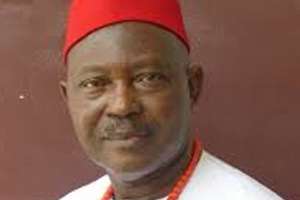
“Preparations are ongoing for field work to start”- Paul Tasong, National coordinator of PPRD-NW/SW.
Paul Tasong in this interview culled from Cameroon Insider expounds on the plan, how they’ll proceed with its execution, the priority areas it will target, financing and involvement of development partners as well as what is expected from the beneficiary population. Read on:
Mr. Minister you were recently appointed by the Prime Minister as National Coordinator of the Presidential Plan for the Reconstruction and Development of the North West and South West Regions. What appraisal do you make of this challenge bestowed on you?
I truly felt humbled but at the same time blessed with the honour bestowed on my person with this additional challenge. I am upbeat on the task that lies ahead, despite its immensity.
What exactly will you be setting out to reconstruct? Can we have an idea of the magnitude of the destruction in the two English-Speaking Regions as a result of the armed conflict?
For close to four years, the NW and SW Region have been hit very hard by the effects of a sociopolitical crisis, leading to thousands of internally Displaced Persons (IDPs) and refugees who now live in host communities or countries.
The crisis has had major impacts on three core areas; (a) social cohesion, (b) infrastructure and the (c) local economy of the two regions. Violent incursions and attacks have broken the social fabric between communities, damaged if not destroyed basic infrastructure, and put local economic development on hold.
(a) Social cohesion is the willingness of members of a society to cooperate with each other in order to survive and prosper. It is essential to ensure a wide variety of positive social outcomes such as health and economic prosperity. The separatist crisis has indeed severely undermined the capacity of the NW and SW communities to realise their goals as a unified and collaborative society.
The most obvious damages have affected individual homes. Housing represents a crucial linkage between community members, thus providing opportunity for bottom-linked citizens’ participation, and their engagement in public affairs. Communities from North West and South West have suffered arson, pillages and destruction of their own homes.
(b) In terms of infrastructure education, health, transport, energy and water supply systems have been either destroyed or left to rot. On the other hand, new budgetary allocations have not been executed as expected because of the insecurity.
(c) As concerns the local economy the two regions have suffered from economic uncertainly. This constitutes a risk to growth and has discouraged both public and private investments. Although Cameroon continues to enjoy political stability, the growing crisis in the North West and South West has delayed the beneficial effects of policies to encourage diversification and growth. The North West and South West are endowed with rich natural resources and wide range of agricultural products such as coffee, cocoa, maize, and cassava, fish, livestock, potatoes, plantains, beans, vegetables, yams, bananas etc. The South West for example was the biggest cocoa producing region in the country before the crisis and has been relegated to the second position with production dropping from 45.45% to 32% of the national output between 2017 and 2018.
In a nutshell, our knowledge and analysis of the crisis has led us to classify its impact on the wellbeing of the people in the three categories above. We shall therefore set out to reverse the downturn of life in the two regions from these three angles.
In terms of magnitude of the destruction, it is standard practice in project evaluation to quantify needs before venturing into implementation. Data was collected from the field under the coordination of Regional Governors. We are looking forward to rehabilitating some 350 schools, 115 health centers, bridges 400 water points, 500km of low tension power lines, 600km of rural roads, 45 markets, 12, 000 private houses etc. This is just a tip of the iceberg of easy to quantify infrastructure. About 25, 000 hectares of farmlands need attention. Many grazers lost livestock. About 300, 000 lost personal documents.
However, we will have to reconfirm some of these figures, because the situation has changed slightly since the data was last updated.
How do you intend to carry out the task given that the rate of insecurity remains big in the two concerned Regions?
I think you will agree with me that the pockets of insecurity that still exist are residual. It may be out of place here to expand on this affirmation, but simple observation of the scene can testify to this.
In the past few months, we witnessed some upsurges of violence, but I think that was normal given that we were in a political season with the twin elections of 9 February 2020 and the rerun in 11 constituencies of the regions on March 22, 2020.I have followed debates on social media and on traditional news channels, where a few people think reconstruction and development will be impossible while violence continues. I think the protagonists of this point of view are not lovers of peace. I want to state that the PPRD is one of several steps in the search of lasting peace. It is true that the biggest risk of the PPRD is insecurity, but at the same time, the overarching objective of restoring acceptable livelihood surpasses everything else. It is worth emphasizing that the Major National Dialogue was not an event but a process. The simple fact that the President Paul Biya created a Steering Committee under the stewardship of Prime Minister, Head of Government Chief Joseph Dion Ngute, is ample proof of the fact that the process is still unfolding. Furthermore, I think we have gone past the stage of denial. All friends of Cameroon, bilateral and multilateral alike, have made it sufficiently clear that Cameroon cannot be separated. The motives of the crisis are then being addressed one after the other. Reconstruction and Development are therefore taking off at the right time.
Can we have an idea of some of the priority areas that the plan will be focusing on for a start?
Priority will be determined geographically and will go to areas work can be done with minimum risk. We shall prepare comprehensive and holistic packages for each locality. For now, we have a good number of Green localities where we can deploy with less difficulty. As time goes, most of the yellow localities are turning green, and some of the red localities are shifting to yellow.
How much is the rebuilding plan expected to cost and how will funding be sourced? Would you mind telling us more about the external partners accompanying you in this move?
The Government will be the first funder of the plan and most of our bilateral and multilateral partners have indicated their willingness to accompany the process. It is important to recall the very high level announcement by the French Minister of Foreign Affairs when he came visiting. It is important to refer to the provisions of the Prime Ministerial order establishing the plan, which attributes the fiduciary responsibility to the United Nations Development Program, UNDP, to manage all the funds in its capacity as the implementing partner.
When is the plan expected to begin in earnest?
Now. The preparatory work is ongoing for the field work to start.
Would any measures be put in place to ensure that the rebuilt infrastructures are not further destroyed given that the armed fighting is still going on? What will they be?
This is not something that we even want to think of. The recovery of the economy, the reconstruction of public amenities and the restoration of social cohesion are all done to ensure the wellbeing of the beneficiaries. When you talk of beneficiaries, we talk of ownership. If you have your ears to the ground, you will know that the population is fed up with the untold hardship brought about by the crisis.
Any appeal to the population of the two Regions as they await the commencement of the project?
First and foremost, it is fundamental for the people of the two regions to know that they and only they are the beneficiaries of the Presidential plan for Reconstruction and Development. We will expect them not only to support and participate in the implementation, but also take full ownership of its processes. They are represented in the two strategic levels of the Plan (National Steering Committee and Regional Coordination Committee).