A PHP Error was encountered
Severity: Warning
Message: Undefined array key 0
Filename: views/newspaper.php
Line Number: 25
Backtrace:
File: /home1/checkam/news.checkam.info/application/views/newspaper.php
Line: 25
Function: _error_handler
File: /home1/checkam/news.checkam.info/application/controllers/Newspaper.php
Line: 614
Function: view
File: /home1/checkam/news.checkam.info/index.php
Line: 315
Function: require_once
A PHP Error was encountered
Severity: Warning
Message: Attempt to read property "name" on null
Filename: views/newspaper.php
Line Number: 25
Backtrace:
File: /home1/checkam/news.checkam.info/application/views/newspaper.php
Line: 25
Function: _error_handler
File: /home1/checkam/news.checkam.info/application/controllers/Newspaper.php
Line: 614
Function: view
File: /home1/checkam/news.checkam.info/index.php
Line: 315
Function: require_once
A PHP Error was encountered
Severity: Warning
Message: Undefined array key 0
Filename: views/newspaper.php
Line Number: 25
Backtrace:
File: /home1/checkam/news.checkam.info/application/views/newspaper.php
Line: 25
Function: _error_handler
File: /home1/checkam/news.checkam.info/application/controllers/Newspaper.php
Line: 614
Function: view
File: /home1/checkam/news.checkam.info/index.php
Line: 315
Function: require_once
A PHP Error was encountered
Severity: Warning
Message: Attempt to read property "name" on null
Filename: views/newspaper.php
Line Number: 25
Backtrace:
File: /home1/checkam/news.checkam.info/application/views/newspaper.php
Line: 25
Function: _error_handler
File: /home1/checkam/news.checkam.info/application/controllers/Newspaper.php
Line: 614
Function: view
File: /home1/checkam/news.checkam.info/index.php
Line: 315
Function: require_once
Officials call for vigilance at refugee camp
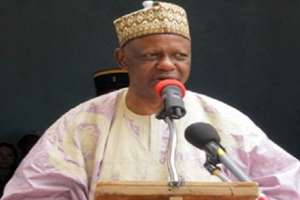
Officials call for vigilance at refugee camp.
The government of Cameroon has stressed the need for a better protection of refugees in the face of the COVID-19 pandemic.
The call was made by the Secretary of State at the Ministry of Public Health in charge of pandemics and epidemics, Alim Hayatou, while visiting the Minawao refugees camp in the Mayo Tsanaga Division, the Far North Region of Cameroon. The camp hosts close to 65 thousand refugees with a risk of propagation of the virus if a case is detected. Alim Hayatou was thus on ground to see measures taken to prevent the spread of the virus. Here, hand-washing points have been installed all over 7 hectares of land, the wearing of face masks is compulsory for all occupants of the camp, while an isolation Centre has been set up far away from the camp to take care of any suspected case that may arise. The Secretary of State at the Ministry of Public Health, Alim Hayatou, praised the officials at the camp for the measures taken but stressed they need to remain alert and vigilant to any eventuality.
Alim Hayatou’s trip to the Far North Region also took him to the Maroua Regional Hospital to inspect the measures put in place. Here, the two wards have been specially set up to take care of COVID-19 patients. The wards are isolated from the rest of the hospital as authorities at the hospital said it is to avoid any contact between Covid-19 patients and other patients. At the end of the visit, a working session was held with all the stakeholders in which was revealed the Far North Region has so far recorded 50 COVID-19 cases with 26 recoveries and three deaths. The Maroua 1 Subdivision leads the charts in the Far North Region with 23 cases followed by Maroua II with 13 cases and Kousseri with 8 cases. It was on opportunity forthe Regional Delegate of Public Health to outline some of the problems faced by the Region, notably the lack of laboratories to facilitate testing. The region still relies on the Centre Pasteur laboratory in Garoua for testing, the Regional Delegate said. The issue of stigmatization of COVID-19 patients in the region was equally raised and Secretary of State at the Ministry of Public Health stressed authorities in the region should intensify campaigns to sensitize the population to respect the population as well as adopt responsible behavior. At the end of the visit, symbolic gifts were handed over to administrative and religious authorities as well as traditional rulers.
Culled from Cameroon Insider
Anglophone Crisis: Refugees in Nigeria struggle for survival as COVID-19 hampers donors’ efforts
Cameroonians fleeing the armed conflict in the North West and South West Regions and seeking refuge in Nigeria may starve to death as COVID-19 captures the attention of donor agencies.
For Roland Fon, Anglophone refugee in Nigeria, these are difficult moments finding what to eat and how to stay alive.
Fon is one of the thousands of Cameroonians that escaped the ongoing war in Cameroon’s English-speaking regions and is living in Nigeria as a refugee. To him, very little matters apart from finding his daily meal and thinking of how to keep a roof over his head.
“Our living conditions in Lagos are deplorable. Some of us have been living under the bridges, and on the streets with nothing to eat. Some benevolent people helped rent an apartment for us for a year and it expires on the 14th of July. We don’t know where to go now,” says Fon Roland.
The lockdown caused by the coronavirus pandemic has not made matters easier for Roland and his counterparts. Staying indoors, their efforts and those of their benefactors have been greatly limited.
To better coordinate their activities, Roland says they established a unified front after being chased from Cross River State. Relying on the Nigerian or Cameroonian government for aid of any kind however is not an option.
“If they can come and take our leaders from here and the Nigerian government knows what is going on and even participated in it, it is difficult to go to them to do any other thing. We cannot go back to the government from which we are running… Unless they send aid themselves we cannot go to them for it. We are afraid so we just have to stay mute,” Roland says.
Ako Allan who works with Cameroon refugees in Lagos, Taraba State and other parts of Nigeria says even donors seem to be shifting their focus and some are limited.
“It is a serious challenge for them now…,” he tells Mimi Mefo Info. “A few persons come here, give masks and sanitisers but it doesn’t cover the need. Before Covid-19, it was hard and most had to depend on minimal jobs …”
With the need for donors and persons to recover economically due to the pandemic, Allen says donations have dropped in terms of provision for food. The desperation level, he explains, is rising. “Right now, Taraba state has a higher influx of refugees coming in more than Cross River state. This is as a result of intensified fighting in Donga Mantung Division,” he says.
Though no coronavirus case has been recorded among the refugees, Allen believes it does not give reason to downplay the possibility, as there is the lack of test kit in the camps. Observing preventive measures such as social distancing, he adds, is also an uphill task due to the crowded nature of the refugees as well as the poor living conditions.
Now that COVID-19 preventive measures are being relaxed, Roland says he and other refugees are left with no other option but to fend for themselves whichever way possible. They now seek work with the skills they have acquired. With limited opportunities in sight, they believe persons of goodwill will help them pick up the pieces of their lives.
“Some benevolent people have helped some of us to learn some trades from which we can have a livelihood … we are really in need, anybody who can help us should help,” he pleads.
In February the United Nations High Commission for Refugees, UNHCR, said more Cameroonian refugees had fled to Nigeria, bringing the arrivals to close to 60.000.
Fleeing due to fears of electoral violence, the UNHCR said some arrived with bullet wounds and that it was working with Nigerian authorities to ensure the refugees are able to access shelter and basic services.
UNHCR also admitted that food, shelter and health assistance were urgent needs for the new arrivals.
“Refugees need support to become self-reliant.
With access to education, health services and labor markets, they can take care of their families and give back to the local communities hosting them,” said Roger Hollo, UNHCR Deputy representative in Nigeria.
With Covid-19 and the war still raging on, one can only expect the violence and consequently the resulting misery to increase more.
Culled from Mimi Mefo Info