A PHP Error was encountered
Severity: Warning
Message: Undefined array key 0
Filename: views/newspaper.php
Line Number: 25
Backtrace:
File: /home1/checkam/news.checkam.info/application/views/newspaper.php
Line: 25
Function: _error_handler
File: /home1/checkam/news.checkam.info/application/controllers/Newspaper.php
Line: 614
Function: view
File: /home1/checkam/news.checkam.info/index.php
Line: 315
Function: require_once
A PHP Error was encountered
Severity: Warning
Message: Attempt to read property "name" on null
Filename: views/newspaper.php
Line Number: 25
Backtrace:
File: /home1/checkam/news.checkam.info/application/views/newspaper.php
Line: 25
Function: _error_handler
File: /home1/checkam/news.checkam.info/application/controllers/Newspaper.php
Line: 614
Function: view
File: /home1/checkam/news.checkam.info/index.php
Line: 315
Function: require_once
A PHP Error was encountered
Severity: Warning
Message: Undefined array key 0
Filename: views/newspaper.php
Line Number: 25
Backtrace:
File: /home1/checkam/news.checkam.info/application/views/newspaper.php
Line: 25
Function: _error_handler
File: /home1/checkam/news.checkam.info/application/controllers/Newspaper.php
Line: 614
Function: view
File: /home1/checkam/news.checkam.info/index.php
Line: 315
Function: require_once
A PHP Error was encountered
Severity: Warning
Message: Attempt to read property "name" on null
Filename: views/newspaper.php
Line Number: 25
Backtrace:
File: /home1/checkam/news.checkam.info/application/views/newspaper.php
Line: 25
Function: _error_handler
File: /home1/checkam/news.checkam.info/application/controllers/Newspaper.php
Line: 614
Function: view
File: /home1/checkam/news.checkam.info/index.php
Line: 315
Function: require_once
The relevance of the Catholic Priest.
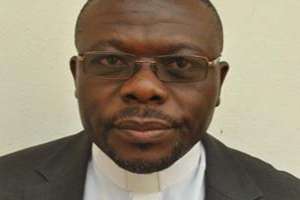
The relevance of the Catholic Priest by Fr. Joseph Awoh.
The dictionary defines something’s relevance to a situation or person as its importance or significance in that situation or to that person. In today’s world, to seek to be relevant is the trendy, even advisable thing to do. The person who seeks relevance works consciously or takes action to ensure that they matter to their supervisors or superiors, as well as to those in their charge, to their fans or followership and to the wider community.
Most of those who entered the workforce in Cameroon over twenty five years ago were reassured that the knowledge and skills which they obtained at university would keep them relevant throughout their entire career. The modern economy, characterised as it is, by many and frequent advances in technology, has made retaining relevance in one’s career very difficult. For this reason, many people undertake diverse degree courses and certifications to add to their skill sets and so to make themselves more versatile. They need to be constantly seeking relevance by equipping themselves with the latest knowledge and skills in order to stay ahead of those constantly entering the workforce. If they fail to do this, they become obsolete and are easily replaceable.
But the pressure to seek relevance is not only on the workforce employed in the public or private sectors of the economy. Priests and religious, who pursue a vocation rather than a career, also feel the pressure sometimes to be reassured of their relevance. This is human and acceptable, as long as the priest or religious realises that the kind of relevance they should be seeking is different from the relevance careerists and entertainers seek.
If we apply the dictionary definition of relevance to priests and religious, the priest or religious should be asking themselves: why am I a priest? What is my importance or significance to the Church or Christian community which I serve? In the Gospel according to Saint John, Jesus instructs us that we should “not work for food that perishes but for the food that endures for eternal life” (John 6:27). In these words, we can see the importance and purpose of the priesthood for the world today. Research shows that the relevance of the priest is in serving an eternal and other-worldly purpose, not in competing with others for continued visibility and celebrity.
Jayeel (2012) found that priests find satisfaction in administering the sacraments and equipping their communities, through counselling and organizing. It is in serving and building up the community that they get their sense of worth, satisfaction, well-being and inner peace. This is because, in these ways, the priest fulfills his ultimate mission as an alter Christus, leading others to salvation. It is said of St. John Mary Vianney, patron saint of all priests that he lost his way when he was going to take up his appointment as Parish priest in the village of Ars (France) and said to a young boy whom he met: “Young man, if you show me the way to Ars, I will show you the way to Heaven!” He could make such a bold statement because he understood his priestly identity and the importance of the priesthood. He knew that the priest exists in order to lead people to heaven, and therein lies his relevance.
During a Symposium at the Catholic University of America in 2011, Rosetti invoked data from his 2004 and 2009 and other surveys of US Catholic priests to argue that Catholic priests are among the happiest people in any profession or occupation in the United States of America today, and what made them happy was their prayer life, their spiritual centering and their relations with God, other priests and lay friends. His surveys found that the more time a priest spent in prayer each day; the more likely he was to be happy and to score high on many other factors that correlate positively with happiness. In a similar way, Susan Pinkus found in a Los Angeles Times Poll Analysis that “the greatest joys priests receive in their life and work as a priest are helping others (37%), giving the Sacraments (31%), offering Mass (21%), preaching (21%), helping laity find spirituality/God/restoring faith (19%) and sharing the lives of others (16%)”.
If we go back twenty five years in the Catholic Church in Cameroon, most of us who entered the priesthood at that time were reassured that the knowledge and skills which we obtained in the Major Seminary would keep us relevant throughout our ministry in terms of offering the Sacrifice of the Mass, celebrating the Sacraments, preaching, assisting our Christians to relate to God, and helping them out with counsel or materially where possible. Like with the world of work, times have changed and we need to make use of ongoing formation (or CPD) in various areas to be able to carry out our ministry effectively in the present circumstances. We not only need a little more knowledge in order to keep up with frequent and fast-paced advances in technology; we need a little more expertise in education, counselling, pastoral psychology and many other sacred and secular sciences. In other words, priests and religious need to continue to seek to be relevant to their Christians and to the Church as far as leading those entrusted to their pastoral care to God is concerned. And our guiding question must always be: what do I need to do to lead this community more effectively to God?
In practice, we find the difference between effectiveness in ministry and visibility and celebrity very hard to work out. As an extreme example, there is a video making its rounds on social media of a priest in alb and stole dancing coupé décalé. I do not know what the occasion would have been but find it really difficult to see how his coupé décalé dancing skills would be relevant to the liturgical celebration he was involved in. The same could be said of the numerous priests who have become healers and exorcists (without mandate) and engage in esoteric practices far removed from the rituals of the Catholic Church around healing and exorcism. And then there are those of us whose “expertise” in our areas of knowledge or practice has become more important than “showing our Christians the way to heaven” because they give us the visibility and celebrity which the priesthood does not.
In my experience as a Catholic Christian and priest, I have never had the impression that the Christian community prefers one priest to another because he is a better dancer, or singer, or because he preaches like the Pentecostals or because he is more educated or possesses expertise which the other does not. Over and above our credentials, the People of God want the one who brings Christ to them and brings them nearer to Christ by prayer, by the celebration of the sacraments, and by his word and example. If a priest seeks to be relevant in this way, he is seeking relevance according to the mind of the Church, and of God. But the relevance of visibility and celebrity is a powerful temptation in the Church today, and we all need to pray and make a conscious effort to overcome this temptation, as priests and as Christians.