A PHP Error was encountered
Severity: Warning
Message: Undefined array key 0
Filename: views/newspaper.php
Line Number: 25
Backtrace:
File: /home1/checkam/news.checkam.info/application/views/newspaper.php
Line: 25
Function: _error_handler
File: /home1/checkam/news.checkam.info/application/controllers/Newspaper.php
Line: 614
Function: view
File: /home1/checkam/news.checkam.info/index.php
Line: 315
Function: require_once
A PHP Error was encountered
Severity: Warning
Message: Attempt to read property "name" on null
Filename: views/newspaper.php
Line Number: 25
Backtrace:
File: /home1/checkam/news.checkam.info/application/views/newspaper.php
Line: 25
Function: _error_handler
File: /home1/checkam/news.checkam.info/application/controllers/Newspaper.php
Line: 614
Function: view
File: /home1/checkam/news.checkam.info/index.php
Line: 315
Function: require_once
A PHP Error was encountered
Severity: Warning
Message: Undefined array key 0
Filename: views/newspaper.php
Line Number: 25
Backtrace:
File: /home1/checkam/news.checkam.info/application/views/newspaper.php
Line: 25
Function: _error_handler
File: /home1/checkam/news.checkam.info/application/controllers/Newspaper.php
Line: 614
Function: view
File: /home1/checkam/news.checkam.info/index.php
Line: 315
Function: require_once
A PHP Error was encountered
Severity: Warning
Message: Attempt to read property "name" on null
Filename: views/newspaper.php
Line Number: 25
Backtrace:
File: /home1/checkam/news.checkam.info/application/views/newspaper.php
Line: 25
Function: _error_handler
File: /home1/checkam/news.checkam.info/application/controllers/Newspaper.php
Line: 614
Function: view
File: /home1/checkam/news.checkam.info/index.php
Line: 315
Function: require_once
Decentralisation of payment centres: Treasury Director General elaborates on what will change.
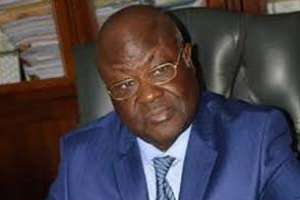
Decentralisation of payment centres: Treasury Director General elaborates on what will change.
The reform of the de-concentration of state treasury operations has taken root with the creation of 16 specialised payment centres by a ministerial arête of 11 June 2020. They will be automous, leading to an improvement in the quality of services, but will still use the Unique Account. Moh Sylvester Tangongho, the innovative Director General of Treasury, Financial and Monetary Cooperation, in the Ministry of Finance, MINFI, in the following interview culled from The Guardian Post outlines the benefits of the recent decision taken by the MINFI boss, Louis Paul Motaze, to decentralise payment centres.
What motivated the recent decision by the Minister of Finance to decentralise payment centres across the country?
It was an Arrête of June 11, 2020 creating 16 specialised payment centres which are attached to ministries in Yaounde. He equally created two Central Treasuries out of the financial circumscriptions of the Centre and Far North regions. Concretely, the Central Treasury in Yaounde is now broken into two; Central Treasury I and the Central Treasury II. I want to indicate that the Central Treasury in Yaounde used to have more than 190 Treasury Stations attached to it.
The Treasury Station in Maroua now has Maroua I and Maroua II. It used to have more than 70 Treasury Stations attached to it which made it very difficult for accounts to be controlled and even to control the operations of the accountants.
In terms of motivations, it’s actually the over concentration of operations on specific Treasury Stations. Taking the case of the specialised Paying Stations that are attached to ministries, most of the payments used to be done at what is called the Paymaster General which used to take care of more than 90 percent of operations before we started de-concentration about two or three years ago.
Otherwise, the Paymaster General used to carry out more than 90 percent of public expenditure on the budget which made it extremely difficult. There was over centralisation of operations on one Treasury Station in terms of control and in terms of services to the public. You could have somebody with a Mission Order of about 100, 000FCFA moving around for so many months just because of this over concentration.
But now, there are Treasury Stations attached to each ministry. We have like three ministries with their Treasury Stations. This is going to facilitate the treatment of files, facilitate services rendered to users and more especially the follow-up of patrimonial accounts. You will recall that the financial regime of July 11, 2018 had put in place the Patrimonial Account. We have only 1½ years to put in place that Patrimonial Account.
There is going to be a census of all the belongings of the state, fixed assets and removable ones. All these will be done by the new Paymasters General who are going to be appointed and attached to ministries. It is really going to facilitate the putting in place of that Patrimonial Account which is indicated in the fiscal regime of 2018.
How much power do these Centralized Pay Centres have? Are they autonomous?
We already have experienced on a number of Treasury Stations; Ministry of Defense, Ministries of Basic and Secondary, Ministry of Public Works, we have the Ministry of Mines and two others which are attached to Ministries. And these Treasury Stations have been made autonomous. The only link they have with the Central Service is the usage of the Unique Account. If the Regional Treasurers use the same account; we have just one single account which is used by all the principal accountants.
In terms of autonomy, that is the only link that they have with the Central Services. And of course, when you have one account, it means you have to know what is inside the account before you can pass your operations. Nobody is going to leave his or her ministry to give instructions to the treasurer in the Ministry of Public Works or to the treasurer in the Ministry of Education. In terms of autonomy, they are autonomous because these treasurers would be producing management accounts which will be sent to the Audit Bench. There will be no authority who can give them instructions on what to do because they are the judges of the regularity of operations. For instance, if an accountant finds out that an operation is variable, he cannot pay. Not even the minister can oblige him to pay because as Principal Accountant, he has to send his management account to the Audit Bench. With the new system of the Patrimonial Account that I am talking about ministers will also have to do Administrative Accounts which have to be checked with the Management Account. All these will have to go to the Audit Bench. In terms of autonomy, they are not going to take instructions from anybody apart from the fact that they will be using a single account like all other treasuries.
How will the Central Treasuries created for Yaounde and Maroua function?
The minister’s Arrête already presented the Treasury Stations that will be attached to them. The Yaounde I Treasury will have the accountants who are under Mfoundi, Nyong& So’o, Mfou&Akono, Nyong&Kelle, Nyong&Mfoumou. For Yaounde II, it will have accountants in the divisions of Mbam&Inoubou, Mbam& Kim, Mefou&Afamba, Lekie and Upper Sanaga. For the case of Maroua, it will have Maroua I in the Mayo Sava, Logone& Chari and Diamare and for Maroua II, you are going to have the divisions of Mayo-Kani, Mayo Danay, and Mayo Tsanaga.
How soon will these reforms take off?
These reforms are going to take effect immediately once the treasurers are appointed. To be more concrete, they are going to be in place and start working but the real budgetary operations would begin from January 1, 2021. A computer system will be put in place. But they are going to be operational. When it is possible, the operations that are at the Central level, once they are in place and they have the technical facilities to do the work, operations of the Paymaster General can be transferred to them even before the end of the year. The budget of 2021 will all be assigned to these new Treasury Stations. But they are going to be operational immediately while waiting for the new budget which will be assigned to them.
What do you expect to see happen especially for the users of the services of these structures?
These reforms were long awaited. I remember when we were still in school (ENAM), we were talking about the over concentration of the operations at the level of the Paymaster General but it was not a very easy reform. Gradually with the amelioration of government services, we are getting there. I think that we are getting to a point of no return. We will never get back to it. Each ministry will eventually have its own treasury and it will facilitate for the users, the treatment of their files. You can imagine a Treasury Station that treats like 10,000 files a day! Now you get to a Station where you will have a Treasury Station that will treat like a hundred files. In terms of amelioration of the quality of services to Cameroonians, it’s very feasible.
What sort of benefits are there for the users of these Treasury Stations?
The benefits for the users is actually that the payments are going to be far easier for them because they are not the ones to go looking for programming. It’s not like the users coming to see if their names are on the program or not. It will be nearer the treasurer. The treasurer will be the one who will be preoccupied with getting money from the Central Treasury and using it to take care of the services rendered.
Whatever the case, in terms of treatment, the number of files will be reduced drastically. There will be more visibility on the operations that are carried out at the level of each ministry. Users are going to be paid within the shortest time possible because the time for the treatment of their files will be highly reduced.
In the past, some Treasury Stations used to receive money which they didn’t have the need for. The Ministry of Agriculture, for example, might need money during the planting season and because of liquidity problem and delays they may get the money after the planting season. At that time, the money will no longer be useful.
Now, you have a treasurer at the Ministry of Agriculture who knows exactly what is urgent. He knows that this is the planting season and they need the money now. The treasurer who is in Higher Education knows that this is the time to pay scholarship to students. He has to pay it because it’s urgent, and so will do everything to ensure that it is paid. It’s not like diluting their concerns in a global concern which might sometimes not be well perceived.
Mr. Director General of Treasury, we imagine that when there is fluidity in the treatment of files, there will also be the fight against some malpractices. Is good governance also to benefit from this?
When I talked of ameliorating services to users, I am actually talking about governance. It includes better services to users, better control of operations between the vote holder and the treasurer who is easily controlled by the Audit Bench because the minister has to produce an Administrative Account. The treasurer produces the Management Account which will be forwarded to the Audit Bench. At the end, there will be better tracking of resources when you have a treasury attached to a ministry. If you are in a ministry and they come and tell you that they have constructed a building, the bill comes to you for payment, and may be the building is just nearby and all the documents are showing that the building has been completed, the treasurer is more likely to understand and know that there is a bill for a building but the building is not there, I am not seeing the building. But in the case where you are a Paymaster General and treating hundreds of documents, when they bring the documents to you, you cannot know. With a treasurer who is attached to a ministry, there’s no way someone can say he has bought 100 computers and the treasurer in that ministry is not aware. So, there is a lot of advantages for users in terms of resources that will be better used, in terms of timing, priority and so on.