A PHP Error was encountered
Severity: Warning
Message: Undefined array key 0
Filename: views/newspaper.php
Line Number: 25
Backtrace:
File: /home1/checkam/news.checkam.info/application/views/newspaper.php
Line: 25
Function: _error_handler
File: /home1/checkam/news.checkam.info/application/controllers/Newspaper.php
Line: 614
Function: view
File: /home1/checkam/news.checkam.info/index.php
Line: 315
Function: require_once
A PHP Error was encountered
Severity: Warning
Message: Attempt to read property "name" on null
Filename: views/newspaper.php
Line Number: 25
Backtrace:
File: /home1/checkam/news.checkam.info/application/views/newspaper.php
Line: 25
Function: _error_handler
File: /home1/checkam/news.checkam.info/application/controllers/Newspaper.php
Line: 614
Function: view
File: /home1/checkam/news.checkam.info/index.php
Line: 315
Function: require_once
A PHP Error was encountered
Severity: Warning
Message: Undefined array key 0
Filename: views/newspaper.php
Line Number: 25
Backtrace:
File: /home1/checkam/news.checkam.info/application/views/newspaper.php
Line: 25
Function: _error_handler
File: /home1/checkam/news.checkam.info/application/controllers/Newspaper.php
Line: 614
Function: view
File: /home1/checkam/news.checkam.info/index.php
Line: 315
Function: require_once
A PHP Error was encountered
Severity: Warning
Message: Attempt to read property "name" on null
Filename: views/newspaper.php
Line Number: 25
Backtrace:
File: /home1/checkam/news.checkam.info/application/views/newspaper.php
Line: 25
Function: _error_handler
File: /home1/checkam/news.checkam.info/application/controllers/Newspaper.php
Line: 614
Function: view
File: /home1/checkam/news.checkam.info/index.php
Line: 315
Function: require_once
The Ebo Forest conservation conundrum: The battle for Ebo is muted. But the war between indigenous c
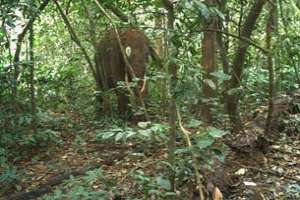
The Ebo Forest conservation conundrum: The battle for Ebo is muted. But the war between indigenous communities & gov’t over ancestral land is just getting started…
Cameroon started the process to turn the Ebo forest into a National Park, but local communities feared losing their land. The government then resorted to creating logging concessions in the area, but the community also opposed the decision, forcing the authorities to backtrack. But the Banen homeland might still be used for logging, and this could spell trouble for further clashes between the state and indigenous communities, over land seizure.
By Akua Nalova Mambeh
Dr. Boli Baboule Zachee, a 74-year-old retired Cameroonian soil-science researcher, is living in Cameroon’s cosmopolitan capital city of Yaounde. However, he says he longs to return to, and be buried in his ancestral land, the Ebo Forest, situated dozens of miles away. But governmental actions regarding the land may dash his hopes. His experience is typical of those of people in some 40 communities that make up the Banen indigenous group—which originated from the Ebo forest. They were forced to leave the forest in 1963, as Cameroon soldiers and guerrilla fighters fought each other in the wake of the country gaining independence from France.
“We were expecting the state to facilitate our return to our land after 57 years of long wait, but it instead wants to dispossess us of this land. We took part in the pacification of the country by ceding our land. My greatest wish has always been to be buried in my homeland,” said Dr. Boli Baboule, who has already spent 19 years of his retirement career in Yaounde.
“Many Banen people today face a lot of problems wherever they are in Cameroon. They are tagged as strangers and are constrained to cultivate only food crops instead of cash crops like cocoa. Their situation today is similar to that of other persecuted people in the world,” he said.
The 40 villages of the Banen tribe were then resettled within a strip of land about 10 miles outside the forest edge. Since then, their former villages have grown into a high biodiversity ecosystem as the state failed in her promise to assist them to return to their ancestral land after the guerrilla fighters were defeated, according to a 1963 prefectoral order a Banen community member provided. Nearly 60 years later, the land remains enclaved, and the government may open the forest to logging.
The people of Banen today face two major threats to their existence: poaching, and government’s intention to exploit their land. Dr. Boli Baboule is now stuck in Yaounde - overwhelmed by the infirmities of old age; can barely speak or walk - but wishes he were living in the Ebo Forest. For Baboule, it would be an emotional reunion with his ancestors.
“My greatest desire has always been to take my wife and my son, and show them my birthplace [in the Ebo forest where their former villages were found].We are asking the state to do us the minimum justice. This forest shouldn’t be exploited to the detriment of the local population.”
Cameroon took initial steps to convert the Ebo forest into a National Park in 2006, but the process stalled in 2011 following pushback from local communities which feared they would lose their ancestral land to the state.
“Transforming the Ebo forest into a National Park meant the population would not have had any access to the area anymore. Access would have been limited only to tourists. The local population would not be allowed to fetch even a log of wood from the area. A National Park meant we would have been dispossessed of the land forever,” Baboule said.
The government announced in February 2020 that it would classify the zone as a forest management unit (FMU), meaning logging rights could be auctioned to the highest bidder. In July, Cameroon opened nearly half of the 150,000-hectare functionally-intact forest (approximately the size of London) to logging, drawing furious condemnation from the indigenous people and the international community.
“The gazetting [zoning] of a forest is done exclusively in the interest of the state. Between 2012 and 2019, pressure on the area’s forest resources increased, forcing us to take strong measures to reconfigure the area. This approach is to reconcile conservation and socio-economic stakes, especially at a time when production industries are experiencing unrivalled challenges,” said Jules Doret Ndongo, Cameroon’s Minister of Forestry and Wildlife.
Researchers and conservationists both from Cameroon and other countries petitioned the government to cease the creation of the two forest management units, and instead provide stakeholders the opportunity to discuss the best options for the land. The President of Cameroon, Paul Biya, asked the country’s Prime Minister, Joseph Dion Ngute, to suspend the decision following this opposition, which Ngute did on August 11, 2020. However, the Director of Communications in the Ministry of Forestry and Wildlife, Jean Robert Onana , has indicated that the government may still classify the forest.
“The present statement [decision to suspend the logging concession] will not last long. Classification is a normal procedure and a legal procedure. If we don’t classify this forest, it is subject to poaching or illegal logging,” he said. The decision has reignited the community’s struggle to protect its ancestral land, amid opposition by members of different indigenous communities to also protect their ancestral lands, from what they term “land grabbers’’.
“The logging option is suspended for now, but we need to push for more sustainable land use options for the area,’’ said Dr. Ekwoge Abwe, manager of the Ebo Forest Research Project.
“As a logging concession, the companies will only have the right to harvest timber. They don’t have the right to buy the land. But the community loses ownership of the land to the state,” said Samuel Nguiffo, Executive Secretary of Centre for Environment and Development Cameroon.
The Ebo Battle
Located approximately 60 km from Douala in the Littoral Region of Cameroon, the Ebo forest is the most functionally intact ecosystem in the Gulf of Guinea biodiversity hotspot, and one of the largest remaining tracts of lowland and submontane rainforest north of the Sanaga River in Cameroon. This forest is home to the largest population of Nigerian-Cameroon chimpanzees, gorillas, forest elephants, drills as well as Preuss’s red colobus which are all found on the International Union for the Conservation of Nature’s Red List of critically endangered species. In addition to its rich biodiversity, the Ebo forest was once home to more than 40 communities (the Banen indigenous community) which give this space and its resources considerable cultural, customary and economic importance. Even when the Banen were relocated to a strip of land about 10 miles outside the forest edge by government as it tried to flush out guerrilla fighters of the Cameroon People’s Union, the indigenous people were still, and are still reliant on these resources (non-timber forest products for food and traditional medicine). The zone is an important carbon sink, containing an estimated 35 million tons of carbon which can be supported by the international market, according to the environmental non-governmental organization -Greenpeace. Little wonder why the Banen indigenous group has vowed to defend their ancestral land at all costs.
“Where the state sees forests, we see our villages. The damage already suffered by our people is enormous; the programmed disappearance of our culture and language, plantations abandoned for decades, unkempt graves and other sacred sites. We have the right like everyone else to enjoy the vital space that has always been ours. No one has the right to make us stateless,” said Victor Yetina, chief of Ndikbassogog I, one of the Banen indigenous villages dislocated from the Ebo forest in 1963.
The roots of the tug-of-war between the state of Cameroon and the people of Banen can be traced back to the very foundation of Cameroon. The post-independence guerrilla fighters in Cameroon might be blamed for what the Banen people are facing today. But, they are also a symptom of the country’s past agonies. The Banen tribe was at the forefront of a fierce opposition for the occupation of successive colonial powers in Cameroon, namely Germany and France. France brought a severe repression to this particular tribe and contributed to their dislocation in more than four regions of Cameroon (Littoral, South, South West and Centre) according to an international journal known as the Social Science Research Network (SSRN). The journal adds that the dispersion of the Banen tribe which is part of the Bantoide group, caused (and is still causing) them to lose their culture and most importantly, their dialect—the Tunen.
“It will be unfortunate for Cameroon as a country to lose this important social and cultural heritage,” the journal said. According to the tradition of the Banen tribe, when someone is born, the placenta from which they emanated is buried under a palm tree. The tree is considered their lifetime partner.
“My palm tree [life partner] is still intact in the Ebo forest. We hold these palm trees very dearly to our hearts. Creating logging concessions in the Ebo forest means my wife and child may be able to see my birth place,” said Baboule, adding that he can still spot his palm tree (lifetime partner) even when blindfolded and taken to the Ebo forest. The Banen people today view government’s interest in exploiting the Ebo forest - from attempting to turn the area into a National Park, and now threatening to create logging concessions, as totally unjust. During different meetings, members of the Banen indigenous community issued distress calls to the government of Cameroon not to venture into the forest. They decided to switch from defensive to offensive.
“We want to go back to our villages. We will not stand to see the tomb of our ancestors bulldozed on the pretext that our land has suddenly become a property of the state. We shall fight to the end,” said Simh, a member of the Banen community.
“Somebody from Banen living in a different tribe today is forced to absorb the culture of that tribe at the expense of their own culture. This is how the Banen culture is gradually being wiped out in Cameroon. We will not see that happen because a people is a territory, a culture, its population, and its leaders. We want the state to issue another prefectoral order asking us to go back to our land,” another Banen community member, Dieudonne Doutou, said.
The Banen indigenous group today still feel as though they are victims of circumstance and living on borrowed time as much as any Banen ghetto dwellers in history. They have not really broken out of the prison of their past. They still see themselves as a people who react to history, rather than shape it. Their revolution today seeks to liberate their people from the age-old ghetto mentality of the weak, helpless victim. It sets out to prove that the Banens were not doomed to be objects, but that they could be subjects—that this people whose reality and destiny were always defined for them by external forces, could become a community of choice, with the power to construct their own political history. That is certainly why there is still real anger in the air.
“Human beings [Banen] must be at the centre of whatever the state plans to do in this forest. Conservation or production [efforts] must benefit the people rather than exclude them. We, the Banen people from the Ebo forest, want the government to map out and restore all the [40] villages evacuated in 1963 before any form of development in this area,” said Chief Yetina of Ndikbassogog I village. The Ebo forest is today totally enclaved. A strange, funny, sometimes violent, and always unpredictable road leads to the forest.
“There are no roads. The government wants to take our land and make a land title for itself. This means the relics of our ancestors will be lost forest,” Johnas Bekima, member of the Banen community, told The Horizon.
“Today I am 60 and getting older as the days go by. My children keep asking me where I was born. Our children also keep expressing the wish to go and see where their great grandparents were buried. But how can we take them there?” he asked rhetorically.
Environmental researchers and conservationists have added their voices to the campaigns to spare the Ebo forest of any logging. In a letter addressed to Cameroon’s Prime Minister in April 2020 to express concerns over government’s intention to create logging concessions in the area, over 60 researchers and conservationists said “for several years we have enthusiastically supported the efforts of local communities seeking an appropriate legal status and options for the sustainable long-term management of the Ebo forest because of the significance of the forest and the resources therein for their livelihoods and their culture.” They further “urge[d] the government of Cameroon to initiate an inclusive multi-sectoral land use planning process to explore all land use options.” However, Cameroon’s Minister of Forestry and Wildlife says any action taken at Ebo is in strict compliance with the country’s forestry laws.
“The gazette FMU [Ebo forest] shall have a management plan and an environmental and social impact study which shall take into account conservation actions of biodiversity. This shall enable the private sector to create wealth, and will offer the State, councils and neighbouring communities, opportunities in terms of income and job creation,” said Jules Doret Ndongo during a July 22 press conference.
“The political and strategic vision of the forest and wildlife sub-sector is geared towards the sustainable management of all its forest and wildlife resources. There are 103 forest management units in Cameroon, 68 of which are operational. They have been managed so far without any hitches,” he said.
But environmental experts have pushed back, saying the government must respect its obligations both to its citizens and the international community.
“At the end of the day, logging will not bring the expected development. There is no instance in Cameroon where logging has totally changed the lives of neighbouring communities. Communities don’t need to give out their forests in order to receive development projects from the government,” said Samuel Nguiffo, Executive Secretary of Centre for Environment and Development Cameroon.
“Cameroon has taken commitments under the Paris Agreement to reduce greenhouse gas emissions. Giving out this forest for exploitation means the country is backpedaling on this commitment,” said Augustine Njamshi, co-founder of Pan-African Climate Justice Alliance.
“Several universities in Cameroon use the forest today as a training and research ground for young scientists. The forest is home to many species of conservation importance that are protected by the Cameroon and international laws. There is need to explore alternative land use options including conservation concessions, the sale of carbon and potentially ecotourism that will generate revenue while the forest is still intact,” Dr. Ekwoge Abwe of the Ebo Forest Research Project said.
Crux of the matter
Cameroon’s forestry sector brings both smiles and sadness. With Cameroon’s economy in freefall, forestry operations in the country employ 45,000 people, and account for 5% of the country’s Gross Domestic Product (GDP) according to the Ministry of Forestry and Wildlife. The middle class Central African nation’s GDP was worth 38.76 billion US dollars in 2019, according to the World Bank. Unemployment rate stands at 3.70%, according to Trading Economics global macro models and analysts’ expectations. Out of the 22.5 million hectares of forest that Cameroon has (46% of the total country area), 13 million are designed as places that could be granted as concessions or designated as protected areas. World Resources Institute says Cameroon has lost 3.3millionhectares of forest in the past 25 years - an area approximately the size of Belgium.
“Cameroon is desperately looking for new areas to open to logging. The problem is that the state has already granted a lot of logging concessions,” Nguiffo said, adding: “The forest management system which allowed logging companies to rotate for 30 years known as perpetual rotation has failed. The forests are not rich enough to allow for a second round of rotation. That is why you see companies getting rid of their concessions while others are requesting their concessions to be totally converted into plantations.”
Cameroon is a leading exporter of timber products in Africa, recording 3.54 million cubic metres of exports in 2019, up from 1.8 million cubic metres in 2009, according to the Centre for Environment Cameroon. China and Vietnam provide biggest markets for Cameroon timber.
“Depending on the quality of the tree, a tree is bought at approximately FCFA 160,000 for instance in Cameroon. Once shipped to Europe, this single timber will cost approximately FCFA 2.4million [after being processed]. Very little quantity of timber is processed. There is no efficiency in the logging process since the timber is sold at a very low cost,” says Nguiffo. Indigenous communities which happen to possess a forest in Cameroon today are now caught between new ideas, the new relationships, and the ancient memories, ancient passions, and ancient feuds that keep dragging them into the past.
Indigenous communities and government clashing over logging at the Ebo Forest is not an isolated case in Cameroon. There are numerous similar cases in Cameroon where the government is granting or has already granted companies rights to land either for logging or other industrial activities. In 2010, tension mounted when government opted creating logging concessions in Ngoyla Mintom, an undisturbed tropical rainforest in Cameroon. Some communities in the Ntem Valley Division of Cameroon’s South Region have of late been in an endless battle with government over plans to grant vast areas of land to foreign companies to set up plantations. The communities have filed a court case to have the land title granted by the state to the companies, cancelled, insisting that if they lose their land, they will have no space left for themselves or for their children.
“Because companies are coming in, the government wants to please them by giving them rights over land. But these rights are also claimed by the community. This is what is bringing these conflicts. We will be seeing many such conflicts in the future,” Nguiffo said. Workers of the Cameroon Development Corporation, CDC, the second employer after the state, this month, like it has been some time ago, protested against the sale of vast plantation lands by the government.
Violence has torn through the Anglophone regions of Cameroon for four years now. It began when Common Law Lawyers and Anglophone teachers downed their tools in late 2016 in a peaceful protest to resist what they termed, a deliberate attempt by the central government to wipe out two core cultural values of the Anglophone community in Cameroon, namely, the Common Law and the Anglo-Saxon Sub-System of Education. In the midst of the socio-political conflict, the Senior Divisional Officer of Manyu reportedly issued a prefectoral order asking the population to quit a portion of the division to enable the security forces to flush out separatist fighters in the said area.
“This led to people leaving this area. I think this is a bid similar to what happened in the Ebo forest,” says Nguiffo. Indeed, there are already fears that these people who have been asked to peacefully leave their land for some circumstances, stand to arm-twist with the state over the same area in the future if the latter considers granting the area for any industrial activity.
Besides these conflicts, Cameroon’s forestry sector is riddled with corrupt practices, compounded by inadequate capital and technical expertise for producing value-added wood products.
“There is a lot of corruption, illegal logging and fraud. Tax evasion is endemic. We have for example cases of companies using false documents to claim that timber gotten from somewhere else emanated from their concessions. Or companies trying to reduce the volume of timber that they have produced so as not to pay enough taxes,” Samuel Nguiffo said.
Logging in Cameroon is entering a dark, new chapter. The country is bracing itself for another long violent era of unease should government press on with its insatiable logging ambitions.