A PHP Error was encountered
Severity: Warning
Message: Undefined array key 0
Filename: views/newspaper.php
Line Number: 25
Backtrace:
File: /home1/checkam/news.checkam.info/application/views/newspaper.php
Line: 25
Function: _error_handler
File: /home1/checkam/news.checkam.info/application/controllers/Newspaper.php
Line: 614
Function: view
File: /home1/checkam/news.checkam.info/index.php
Line: 315
Function: require_once
A PHP Error was encountered
Severity: Warning
Message: Attempt to read property "name" on null
Filename: views/newspaper.php
Line Number: 25
Backtrace:
File: /home1/checkam/news.checkam.info/application/views/newspaper.php
Line: 25
Function: _error_handler
File: /home1/checkam/news.checkam.info/application/controllers/Newspaper.php
Line: 614
Function: view
File: /home1/checkam/news.checkam.info/index.php
Line: 315
Function: require_once
A PHP Error was encountered
Severity: Warning
Message: Undefined array key 0
Filename: views/newspaper.php
Line Number: 25
Backtrace:
File: /home1/checkam/news.checkam.info/application/views/newspaper.php
Line: 25
Function: _error_handler
File: /home1/checkam/news.checkam.info/application/controllers/Newspaper.php
Line: 614
Function: view
File: /home1/checkam/news.checkam.info/index.php
Line: 315
Function: require_once
A PHP Error was encountered
Severity: Warning
Message: Attempt to read property "name" on null
Filename: views/newspaper.php
Line Number: 25
Backtrace:
File: /home1/checkam/news.checkam.info/application/views/newspaper.php
Line: 25
Function: _error_handler
File: /home1/checkam/news.checkam.info/application/controllers/Newspaper.php
Line: 614
Function: view
File: /home1/checkam/news.checkam.info/index.php
Line: 315
Function: require_once
Election of regional councilors: Practical modalities outlined by the law
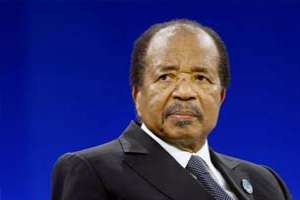
Election of regional councilors:
Practical modalities outlined by the law
Cameroon has never organized regional elections but has clearly outlined texts that would govern the conduct of such an election at the appropriate moment. As at now, the Electoral College is waiting on the convocation of regional elections by the President of the Republic in accordance with existing laws. The Electoral Code and some laws therefore give details on the different stages relating to the election of Regional Councillors, from convening of the Electoral College to the proclamation of results.
Most recently, two separate presidential decrees of September 2, 2020 fixed the number of Regional Councillors per division and per category, and laid down the terms and conditions for the payment of costs relating to the participation of members of the Electoral Colleges in the election of Regional Councillors. Going by the decree, each region shall have 90 Regional Councillors, bringing the total number to 900 in the country. In each region, 70 of the Regional Councillors shall be delegates of divisions and the other 20 shall be representatives of traditional rulers. The Regional Council shall therefore reflect the sociological components of the region as well as gender aspects. The law provides a five-year term of office for Regional Councilors with them being eligible for re-election.
Ahead of Polls
The Electoral Code in Section 258 states that the divisional branches of Elections Cameroon shall draw up an electoral list comprising members of the two electoral colleges. The two electoral colleges as prescribed by the law are delegates of divisions elected by indirect universal suffrage and representatives of traditional rulers elected by their peers. With the closure of electoral registers for 2020, Elections Cameroon therefore in accordance with existing legal texts has till October 20 this year to publish provisional electoral registers and the publication of national electoral registers by December 30, 2020 after necessary technical verifications. Members of the Electoral College, composed of representatives of traditional rulers must be domiciled within the territory of the subdivision concerned. Police, Gendarmerie and prison administration officers, regional administration officers and employees, service persons, judicial and legal officers, and civil servants are according to Section 253(2) of the Electoral Code judged incompatible to contest in regional council elections. However, any decision to accept or reject a candidature or lists of candidates may be challenged before a competent administrative court.
During Elections
Voting after electoral campaigns shall be conducted in the headquarters of each division. The voting process shall be secret and in conformity with international voting standards. Polling stations shall be determined by a decision of the Director General of Elections at Elections Cameroon. A September2, 2020 decree says members of the Electoral College shall be provided an allowance (FCFA 50,000) to cover cost relating to their participation in the polls. Delegates of divisions shall be elected by an electoral college comprising municipal councillors. As for representatives of traditional rulers, they shall be elected by an electoral college composed of first, second and third degree indigenous traditional rulers whose designation has been approved in accordance with regulations in force.
Meanwhile, traditional rulers already holding office of municipal councillors shall cast their vote in only one Electoral College. Delegates of divisions, according to the law, shall be elected through a mixed single round ballot, comprising a majority system and a proportional representation system while the vote for representatives of traditional rulers shall be a single candidate majority system.
Culled from Cameroon Tribune