A PHP Error was encountered
Severity: Warning
Message: Undefined array key 0
Filename: views/newspaper.php
Line Number: 25
Backtrace:
File: /home1/checkam/news.checkam.info/application/views/newspaper.php
Line: 25
Function: _error_handler
File: /home1/checkam/news.checkam.info/application/controllers/Newspaper.php
Line: 614
Function: view
File: /home1/checkam/news.checkam.info/index.php
Line: 315
Function: require_once
A PHP Error was encountered
Severity: Warning
Message: Attempt to read property "name" on null
Filename: views/newspaper.php
Line Number: 25
Backtrace:
File: /home1/checkam/news.checkam.info/application/views/newspaper.php
Line: 25
Function: _error_handler
File: /home1/checkam/news.checkam.info/application/controllers/Newspaper.php
Line: 614
Function: view
File: /home1/checkam/news.checkam.info/index.php
Line: 315
Function: require_once
A PHP Error was encountered
Severity: Warning
Message: Undefined array key 0
Filename: views/newspaper.php
Line Number: 25
Backtrace:
File: /home1/checkam/news.checkam.info/application/views/newspaper.php
Line: 25
Function: _error_handler
File: /home1/checkam/news.checkam.info/application/controllers/Newspaper.php
Line: 614
Function: view
File: /home1/checkam/news.checkam.info/index.php
Line: 315
Function: require_once
A PHP Error was encountered
Severity: Warning
Message: Attempt to read property "name" on null
Filename: views/newspaper.php
Line Number: 25
Backtrace:
File: /home1/checkam/news.checkam.info/application/views/newspaper.php
Line: 25
Function: _error_handler
File: /home1/checkam/news.checkam.info/application/controllers/Newspaper.php
Line: 614
Function: view
File: /home1/checkam/news.checkam.info/index.php
Line: 315
Function: require_once
Special status as an outcome of the MND is a grave error of appreciation - Prof. Willibrood Dze-Ngwa
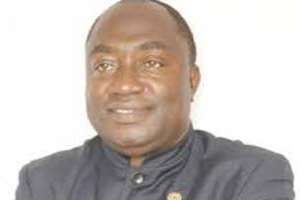
Special status as an outcome of the MND is a grave error of appreciation - Prof. Willibrood Dze-Ngwa, Varsity don/Civil Society activist.
Prof. Willibrood Dze-Ngwa is a respected Varsity don who has articulated the Anglophone problem for the past 23 years. Yet he does not regret having participated at last year’s historic Major National Dialogue (MND) that was boycotted and rubbished by Anglophone separatists.
In an interview with The Horizon, Prof- Dze-Ngwa who is also a civil society actor, however, doubts the genuine political will of the conveners to resolve the Anglophone problem that the MND set out to resolve, given that they did it unilaterally.
The varsity would not see the Special Status as the outcome of the MND, contending that it “has been engraved in Cameroon’s constitution since 1996”.
He is for reconstruction of the North West and South West but wants the process to go side by side with reconciliation. It should start with a ceasefire, then dialogue before the physical reconstruction of infrastructure.
On the way forward, Dze-Ngwa says “there should be the political will from both sides of the divide to be able to sit and talk genuinely”. For him, secession is an option if we cannot live together in peace through a decentralized system of government. Dr Dze-Ngwa begins by stating why he thinks the MND was worthwhile and is still worthwhile. Excerpts:
For any crisis situation, dialogue is worthwhile. The Anglophone crisis in Cameroon is a man-made crisis and there is no crisis created by human beings that cannot be resolved by same human beings using the most likely human means, DIALOGUE! This entails the resolution of the crisis should come from human beings talking. In that connection, the Major National Dialogue was worthwhile and is still worthwhile. It should be noted that dialogue is not an event but a process. It is very important to me that there was this come-together, in the first place. The importance is informed by the fact that a greater majority of the administration and public authorities of Cameroon had initially rejected that there was an Anglophone problem at all. Ministers upon ministers, even some of the Anglophones in government refuted that there was any problem peculiar to the Anglophones in Cameroon. That the President of the Republic overtly admitted the existence of the Anglophone problem and convened a conference highlighting the problem that had hitherto been rejected is worthwhile.
Another importance of the Major National Dialogue is that the main issues discussed focused on the Anglophone problem.
The third component of its importance is that for the first time in the history of this country, a meeting was held with Anglophones dominating in terms of numbers to give some semblance of recognition.
Now the question is whether the conveners of this dialogue were doing it for the gallery or whether they had a genuine political will to resolve a conflict that is shaking the very foundation of the reunified peoples of Cameroon. There was no clear agenda for the dialogue agreed upon by both sides of the divide. So the major regret would be that those who convened us for this dialogue did it unilaterally. So it was like bringing people to come and talk without an agenda agreed on by the conflicting parties.
But there was a pre-dialogue consultation weeks before the holding of the MND.
No. Such consultations were not extended to the leaders of the Anglophone struggle. Let us be very fair when we talk about pre-dialogue consultations. As far as the Anglophone situation was concerned, there was supposed to be an agreed-on agenda, agreeable talking points to both sides of the divide – the government of Cameroon and the representatives of the Anglophones of this country. It means that the Anglophones of this country were supposed to be given an opportunity to hold a meeting and select those who could adequately articulate their ideas and tendencies, while the government should as well come out with people who will articulate government policies and the agree on an agenda for this dialogue but that was not the case. So when we talk about pre-consultations, it was a sham of it all. People were just invited to give their opinions.
The good thing is that, unlike what many journalists reported, unlike what many detractors made the world to know, that the dialogue participants were selected from a club of friends; Far from that, it was not a club of friends. Those who went to the dialogue adequately represented the views of the people and I do not regret taking part in that dialogue. I think I adequately represented the views that I stand for. The views I have articulated for 23 years on the Anglophone problem and its solutions were articulated there. Many people, including even hardcore members of the CPDM took this workshop or dialogue as an opportunity to articulate the grievances of the Anglophones. But there was a problem – the dialogue was just for the gallery because the final decision was not the outcome of the tons and tons of documentation and messages collated. The final document produced did not reflect the storminess of the debates. Even then, to an extent, it was still satisfactory, though practically and overwhelmingly disappointing.
One of the outcomes of the MND was this issue of a special status for Anglophone regions. Do you as one of the representatives of Anglophones feel that it has been given any content at all?
I have not been officially mandated as a representative of the Anglophones. But I have spoken for Anglophones and Cameroonians for 23 years. I have spoken for social justice, against marginalization, that one think that will bring down Cameroon is the Anglophone crisis if not properly handled. I think it was because of those articulations that I was invited to the MND. Let me be very fair. To consider the Special status as an outcome of the MND is a grave error of appreciation. The special status has been engraved in Cameroon’s constitution since 1996. So it is not the national Dialogue that gave those people that special status. Our public official and elected representatives simply failed to clearly articulate, take advantage and implement what already existed in the constitution. It should therefore be clear that the so-called special status is not an outcome of the Major National Dialogue!
But nobody had brought that out.
I do not agree when you say people did not bring it out. We have been applying the constitution progressively since 1997 in this country. Like I said earlier, the elected parliamentarians, the senators in this country failed Cameroonians by not articulating the article on this special status and were applauded. Somebody just came and reminded the people on its existence. The most heated of the panels during the MND was that on decentralization. Decentralisation is in the constitution and so there was nothing new. Somebody just drew our attention to that article and was applauded as a solution to the heated debate. I want the journalists to say it loud and clear that the special status was not a consequence of the MND. It is rather the laxity, the complacent silence of our elected representatives which made the constitution of this country not to be applied. The MND just came and stimulated people to rediscover that article and that is why today we are using it loud-soundingly to blindfold the people, where I see it as very limited.
We are now into implementation of the recommendation s of the MND. How far have we gone with this?
We have hardly begun because as I said, it is good we put things into perspective. We are simply try to put in place the constitution that was adopted in 1996. It is rather the Anglophone problem that has pushed the government to start implementing the constitution to satisfy the grievances of Anglophones, not some special STATUS.
But is that not a step forward?
Too far but too near. Seemingly too far but too near. If you want to talk about special status, given that the House of Chiefs has been created, then there is no specialness about it. There will be regional elections in Cameroon. I don’t know what is special again. We just want to implement the constitution. Concretely speaking, the government of Cameroon is in the logic of respecting the constitution at their pace. It has been stated that the constitution of Cameroon shall be implemented progressively. So it is this progressiveness. The specialness is not felt because the central administration still has overwhelming powers over elected representatives. Or better put, the administration still dominates over political powers. A DO will still lord it over the elected representative.
Even at the regional level, the President of the Republic will still appoint somebody who will be answerable to him. The constitution says the President of the Republic can even dissolve the national councils. So what are we talking about?
It is still the same notion of centralization. Most local administrators in Anglophone areas come from Francophone Cameroon. The language of the military and the police force in Anglophone Cameroon has remained predominantly French despite all odds.
What would have been the ideal situation?
First of all, the ideal situation for the special status is that, its content should have been determined predominantly by those who had been kept at the margins of power for so long. As per decentralization, the ideal situation would have been for political decentralization to lord it over administrative decentralization. That is, when the people have the real powers to decide what system of education they want to pursue, how to recruit the teachers, how their civil service should function, how to raise income with little influence from the central authorities. With the current system of decentralization, those who lord it over the populations of the North West and South West regions are those people who have been overwhelmingly vomited by the populations. So there is an imposition from the top, not letting the people to choose their real representatives.
An ideal situation would have been to dissolve the National Assembly, dissolve the Senate, dissolve the councils and allowing these very sensitive people of the North West and South West and why not the entire country to democratically select their leaders without imposition from the top.
In an ideal situation there should be equitable regional planning in terms of budget. But let us look at it. If the National Assembly sits to discuss the budget just see how the distribution goes. You will see a region not up to one of the divisions in the North West benefitting more than the two Anglophone regions combined!
Yes, let us all agree that dialogue is a process. What pacifies me is that this dialogue started in the first place. What pacifies me is that the government is backing down and trying to extend a hand of fellowship. Originally, there was denial of the existence of the Anglophone problem and an entire people were termed terrorists. Today, the discourse is gradually changing. Both sides of the divide need to do more for some peace to return.
Another recommendation of the MND was the reconstruction and development of the two regions ravaged by war. We now have a presidential plan for reconstruction of the North West and South West (PPRD-NW/SW). How do you appreciate it and to what extent would it help to pacify the situation on the ground?
Reconstruction is welcome. My humble regret is that the current reconstruction process goes with the administrative logic of doing what they want and when they want to do it. It is absolutely illogical to be talking about reconstruction without reconciliation. I think it is absolutely necessary to reconstruct but it is most important to reconstruct the soft power; reconstruct the mind through peaceful engagements; put concrete actions on the ground that can be able to bring back some element of hope. Reconstruction should move from one stage to another. The first stage should be ceasefire. With ceasefire you get to another step, which is genuine dialogue. Genuine dialogue should be woven in social justice. Then we move into the physical reconstruction, that is the roads, the schools, the villages burnt etc. What tickles me most is that while we are talking about reconstruction, the destruction is going on. On the 19th of this month, the small village of Bu was burnt down. Are we going to burn down everything for reconstruction? Both actors in the crisis are still killing people. Ambaboys arestill threatening people; government forces are still burning down houses. What I am saying is that so long as there is no genuine approach towards reconstruction, any construction will be wasted. You can bring all the military in the world; build all the roads and houses and leave. But so long as you have not reconstructed the mind of the people, when the military go, they can turn round and burn these structures. The first reconstruction should be that of the mind – the reconstruction through concrete peace-building mechanisms.
This notwithstanding, I agree with the coordinator of the PPRD-NW/SW that reconstruction should go gradually but they should do so without provoking the populations. Let me say this very clearly. I was a participant of the MND but let me tell you that some topmost Anglophones who also took part in the dialogue are using the reconstruction for themselves, as a money-making thing. They are strategizing. The same people that the population does not want; the same people who said the Anglophone problem did not exist are the same people who are coming out with companies and corporations that they want to do the reconstruction. That is where reconstruction will be wasted energies -because they are not bringing in people who are generally accepted within their communities; they are not bringing in civil society organizations; they are bringing in the same politicians; they are bringing in the same people who have been vomited by their communities etc. Let this be a challenge to the Cameroonian people to investigate who are at the forefront of reconstruction. So those are the regrets of the reconstruction. I am an expert in reconstruction.
What is the way forward one year after the MND if you say implementation of its recommendations has not yet begun?
The way forward is very simple. The problem has been created by human beings. The problem has been created by Cameroonians, and Cameroonians should genuinely resolve the problem with very little political influence because those who have propelled this problem to a high degree are politicians. That is why I have never agreed on any solution based on political ideology. I have argued severally that each political party uses the Anglophone problem to garner support from the masses and each political party sees the solution to this crisis only through its political lenses. Cameroonians should go beyond political parties, get other Cameroonians (respectable Civil society, public, traditional and religious authorities) and sit together and talk genuinely. I am one of those who think that Cameroonians can discuss their issues and solve their problems if there is a genuine political will to do that.
History has proven to us that since independence and reunification till this date, there has been no discussion whose outcome has been wholly implemented. That is, where we recommend neutral bodies to come in. The outcome of any dialogue should be implemented in a way that will be satisfactory to both sides of the divide. So the international partners can be the arbiters. But let me emphasise that there are no two ways out. Anglophones should be allowed to have a meeting amongst them to choose those who can properly articulate their problems so that they can talk with the government.
In this light all those who have been arrested and locked up in the course of the current crisis should be released. In my opinion, there is no reason why Sisiku Ayuk Tabe and co are still incarcerated. The funniest thing is that despite the appeals for their release, they were still slammed life jail! The crisis has also caused us to suffer a lot culturally. We have had to be burying ours far from home; even some traditional rulers have been buried in Douala and Yaounde! Other top officials as well. We still have to rewrite the books of the consequences of this crisis.
So the way forward is that there should be the political will from both sides of the divide to be able to sit and talk genuinely. We can live together as Cameroonians through a federation or through a decentralized system of government. So whether it is a 2-state federation, a 4-state federation, a 10-state federation, or a 58-state federation as per the current 58 divisions in the country, it is welcome. However, if we cannot live together in peace, if the lives of young people are still being cut down and wasted by through bullets, then secession is an option.