A PHP Error was encountered
Severity: Warning
Message: Undefined array key 0
Filename: views/newspaper.php
Line Number: 25
Backtrace:
File: /home1/checkam/news.checkam.info/application/views/newspaper.php
Line: 25
Function: _error_handler
File: /home1/checkam/news.checkam.info/application/controllers/Newspaper.php
Line: 614
Function: view
File: /home1/checkam/news.checkam.info/index.php
Line: 315
Function: require_once
A PHP Error was encountered
Severity: Warning
Message: Attempt to read property "name" on null
Filename: views/newspaper.php
Line Number: 25
Backtrace:
File: /home1/checkam/news.checkam.info/application/views/newspaper.php
Line: 25
Function: _error_handler
File: /home1/checkam/news.checkam.info/application/controllers/Newspaper.php
Line: 614
Function: view
File: /home1/checkam/news.checkam.info/index.php
Line: 315
Function: require_once
A PHP Error was encountered
Severity: Warning
Message: Undefined array key 0
Filename: views/newspaper.php
Line Number: 25
Backtrace:
File: /home1/checkam/news.checkam.info/application/views/newspaper.php
Line: 25
Function: _error_handler
File: /home1/checkam/news.checkam.info/application/controllers/Newspaper.php
Line: 614
Function: view
File: /home1/checkam/news.checkam.info/index.php
Line: 315
Function: require_once
A PHP Error was encountered
Severity: Warning
Message: Attempt to read property "name" on null
Filename: views/newspaper.php
Line Number: 25
Backtrace:
File: /home1/checkam/news.checkam.info/application/views/newspaper.php
Line: 25
Function: _error_handler
File: /home1/checkam/news.checkam.info/application/controllers/Newspaper.php
Line: 614
Function: view
File: /home1/checkam/news.checkam.info/index.php
Line: 315
Function: require_once
Anglophone Crisis:Anglophones will not stop at anything until they achieve self-determination, Fako
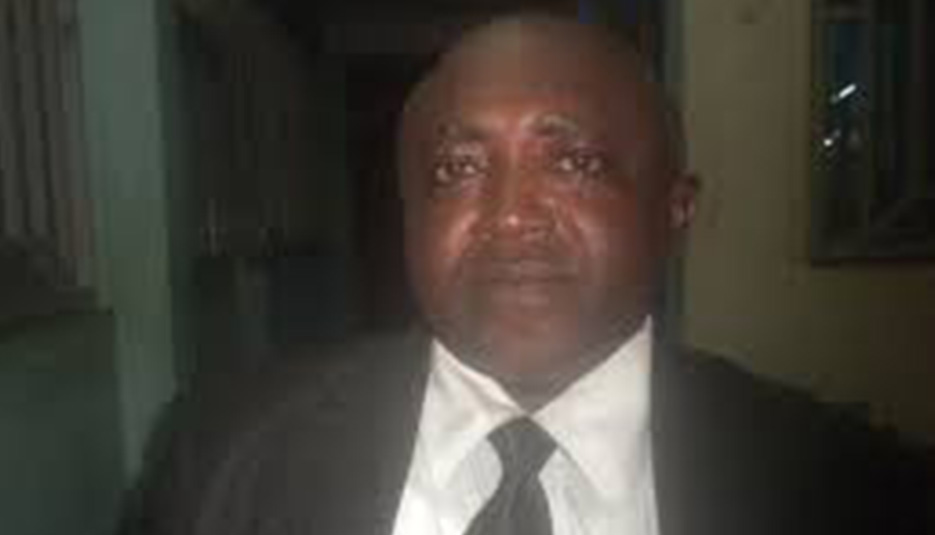
Anglophone Crisis: Anglophones will not stop at anything until they achieve self-determination, Fako Lawyers tell PM.
Being Memorandum presented to the Prime Minister Head of Government, Joseph Dion Ngute, on the occasion of his maiden visit to the South West region by lawyers in Fako Division on14/05/19
Your Excellency,
Permit us to begin by congratulating you on your brilliant appointment as Prime Minister (PM) of the Republic of Cameroon. We pray that the good Lord will guard and guide you in this rather daunting task. Your visit to this region comes at a time when the socio-political atmosphere is tense. Our lives have been affected by three years of socio-political crisis turn to war. It is therefore of paramount importance that we urgently begin to look for solutions. As lawyers, meeting with the PM affords us another opportunity to present some of our urgent challenges both in the administration of justice and peaceful co-existence in our communities. We therefore propose to make this presentation in two parts.
- The plight of the Common Law Lawyers, and
- The socio-political Crisis in Cameroon
In dealing with these issues, we propose to dwell more on the way forward rather than on the causes. Except of course where recapitulating will help in comprehension.
I. THE PLIGHT OF THE COMMON LAW LAWYERS.
Your Excellency, the Common Law Lawyers in this country have over the past three decades, sent a plethora of Memoranda to government decrying the systematic and deliberate efforts to crush our system of justice. Things came to a head in 2016 when in a bid to discuss our difficulties, we scheduled two meetings in Bamenda and Buea, for the 8th and 10th of October 2016. We were prevented from accessing the Court of Appeal premises in Bamenda causing lawyers to descend on the streets in Bamenda. The meeting scheduled for Buea on the 10th was aborted when a marauding police unit dispatched from Douala, invaded the territory, pulled lawyers from their cars and subjecting them to the most humiliating torture ever dreamt of. Lawyers’ wigs and gowns were seized and to this day, not even an apology has been tendered even though the wigs and gowns are with the Divisional officer of Buea. This is to demonstrate that it was a well planned and executed government scheme designed to subdue Common Law Lawyers now and for ever.
Now that you are here, permit us outline some of those issues that Common lawyers have been decrying over the years.
1. Appointment of Notaries:
For some time now, attempts have been made to appoint notaries in Anglophone Cameroon. We decry this for the following reasons. First and foremost, by our training, we are trained as advocates, solicitors and Notaries. We have practised in this manner since independence. We have been serving our people well and there is no public clamour for change, safe from those who want to take away our jobs and subject our people to hardship. Secondly, the concept of appointing Notaries is a Civil Law concept, therefore we see any attempt in that direction as a deliberate and calculated attack on Anglophones in this country.
2. Stop Harmonisation.
We have noted with dismay that the policy of harmonisation is a deliberate strategy to frenchify all Anglophones in this country. It is therefore our position that the government put an immediate stop to the policy of harmonisation. Laws must not be harmonised. We should be proud of our diverse legal cultures and work hard to strengthen each component of our system rather than kill the common Law. Under the guise of harmonisation, we have seen our most cherished Law of Evidence scrapped in criminal matters. We have seen the standard of proof in criminal matters move from an objective standard of “beyond reasonable doubts” to the subjective standard of “beyond doubts” (a near impossibility in law). We have seen the means of proof reduced to proof by any means (which may include evidence received through torture and other forms of duress).
Harmonisation must therefore be stopped forthwith. The continuous attempt at Harmonisation is a mockery of the Common Law Division at the Supreme Court.
3. The Invasion of our Courts by Civil Law Magistrates.
The quality of justice dispensed in our courts today, leaves much to be desired. Most of our courts and legal departments are manned by French speaking civil law trained magistrates. In fact, as we speak, the number of French speaking civil law trained magistrates in the region surpasses the number of Common law trained magistrates in Anglophone Cameroon. In fact we have had incidents where judgements are delivered in French in Anglophone Cameroon. There is no other word to describe this than a policy of ASSIMILATION. The only way to stop this assimilation is to replace these judges and magistrates with Common law trained judges. This is even more urgent when we take into consideration the fact that a Common Law Division has been created in the Supreme Court.
4. Stop the Impending CODE CIVILE.
Your Excellency, are Anglophones a colonised people? Why must our laws be scrapped and civil law imposed on us? The Final process of assimilation will be completed once the mooted Code Civile will be enacted into law. What is wrong with our laws that they must be diluted by an inferior system? You may rest assured that Common Law Lawyers are ready to resist such a Code Civile with all our might. We are ready to start the second phase of the struggle that we began in 2016 if the said Code Civile is enacted into Law.
Your Excellency, we could go on and on enumerating our challenges, however, we believe that the above 4 examples give you a bird’s eye view of our frustrations and also our determination.
In the face of these difficulties, Common Law Lawyers in 2015 proposed that to ensure that our system and our people are protected and reassured, we must return to the 1961 federal structure of the country. To this plea, we received no responses other than brutality. The intransigence of government at the time is the result of three years of crisis and a fratricidal war. Today, so much water has gone under the bridge and lives have been lost. Whole villages have been wiped out, hundreds of thousands displaced, tens of thousands have become refugees. The responses so far by government have been peripheral, half- hearted, grossly insufficient and even a denial of the problem. With your coming into government, there is hope for a new beginning. We therefore feel compelled to contribute our views as to the way forward.
If government is serious about resolving this problem once and for all, it must recognise that the period of intimidation, blackmail and divide and rule is over. At least amongst Anglophones. Government must at all times know that Anglophones will not stop at anything until they achieve self-determination. A unitary decentralised state is dead and buried. Whether it will be internal or external self-determination, will be the result of negotiations between the component parts of this country. As lawyers, we wish to limit ourselves for now on the confidence-building measures that must be put in place to facilitate trust toward working together in the search for a viable solution.
1. Release All Prisoners of the Anglophone Crisis.
This is a condition sine qua non to any hopes for any frank and trustworthy negotiations. Sissuku Ayuk Tabe and his team now represent the face of the revolution and any purported negotiations not sanctioned by them is bound to fail. For them to be fully involved in the negotiations, they need to be free people. But as you must be aware, Sissuku Ayuk Tabe will not proceed to negotiate if other Anglophones arrested because of this crisis are in detention.
2. Demilitarise Anglophone Cameroon.
The number of soldiers in our communities is so disproportionate and terrorising to our populations. Most of them, and in fact whole units can only communicate in French. This creates animosity with the civilian population. If government is serious about resolving this crisis, it should demilitarise Anglophone Cameroon. This is a necessary step.
3. Grant General Amnesty.
There is the need for a general and unconditional amnesty to all the Anglophone leaders of the crisis. Without an amnesty, it will be impossible for Anglophones to be properly represented by those they trust. The present crop of Ministers, Parliamentarians, Senators and Directors have lost the support of the average Anglophone populace that they cannot be trusted to represent their interest.
4. Solicit the services of a mediator.
They history of Cameroon is replete with deceit by the Francophone led government for the past 57 years. At every turn and corner, government business is conducted in the most secretive manner. Lies telling and corruption are the order of the day. It is difficult therefore for Anglophones to trust in the word of the Francophone dominated government. One broken promise after another is the hallmark of our experience with the government. Two examples will suffice. When Southern Cameroons sought to join the Republic of Cameroun in a referendum in 1961, the agreement was that Cameroon will be a federal state. In fact, the constitution of the Republic of Cameroon was amended by their National Assembly to provide for a federal structure of governance. Section 47 of that Constitution provided that the form of the state will never be amended. Barely 11 years after, the Ahidjo government imposed a unitary state in Cameroon which has brought us to where we are today.
In 1990, after the students’ strikes in the University of Yaounde, two new universities where created by a Prime Ministerial decree. An Anglo-Saxon University in Buea and the University of Ngaoundere for Francophones. True to the Anglo-Saxon tradition, the statutes of the University of Buea were produced and the admission criteria set out. It provided that, admission into the University of Buea was conditioned on 5 Ordinary Level papers including English and two Advanced Level papers in one sitting. This made the University of Buea an enviable institution. Today, and beginning from the 2018-2019 academic year, admission conditions have been watered down. Now a candidate can gain admission with 4 Ordinary Level papers and two Advanced level papers in two or more sittings (selotape).
This is how the government breaks its promises every time and the people wallow in misery. It is therefore important that for any meaningful process to be sustainable, a mediator must be appointed by both sides. This will assure the Anglophones that the government is ready to resolve the crisis. It is our view that the above measures will rekindle confidence in the Anglophones and may lead them to trust the process.
We wish to assure your Excellency of our continuous availability to contribute our own views towards getting us out of the present quagmire.
Accept Your Excellency, our most distinguished regards.
Benjamin ENOW AGBOR.
President Fako Lawyers’ Association.