A PHP Error was encountered
Severity: Warning
Message: Undefined array key 0
Filename: views/newspaper.php
Line Number: 25
Backtrace:
File: /home1/checkam/news.checkam.info/application/views/newspaper.php
Line: 25
Function: _error_handler
File: /home1/checkam/news.checkam.info/application/controllers/Newspaper.php
Line: 614
Function: view
File: /home1/checkam/news.checkam.info/index.php
Line: 315
Function: require_once
A PHP Error was encountered
Severity: Warning
Message: Attempt to read property "name" on null
Filename: views/newspaper.php
Line Number: 25
Backtrace:
File: /home1/checkam/news.checkam.info/application/views/newspaper.php
Line: 25
Function: _error_handler
File: /home1/checkam/news.checkam.info/application/controllers/Newspaper.php
Line: 614
Function: view
File: /home1/checkam/news.checkam.info/index.php
Line: 315
Function: require_once
A PHP Error was encountered
Severity: Warning
Message: Undefined array key 0
Filename: views/newspaper.php
Line Number: 25
Backtrace:
File: /home1/checkam/news.checkam.info/application/views/newspaper.php
Line: 25
Function: _error_handler
File: /home1/checkam/news.checkam.info/application/controllers/Newspaper.php
Line: 614
Function: view
File: /home1/checkam/news.checkam.info/index.php
Line: 315
Function: require_once
A PHP Error was encountered
Severity: Warning
Message: Attempt to read property "name" on null
Filename: views/newspaper.php
Line Number: 25
Backtrace:
File: /home1/checkam/news.checkam.info/application/views/newspaper.php
Line: 25
Function: _error_handler
File: /home1/checkam/news.checkam.info/application/controllers/Newspaper.php
Line: 614
Function: view
File: /home1/checkam/news.checkam.info/index.php
Line: 315
Function: require_once
Op-ed: Sisiku Ayuk Tabe writes from jail again!
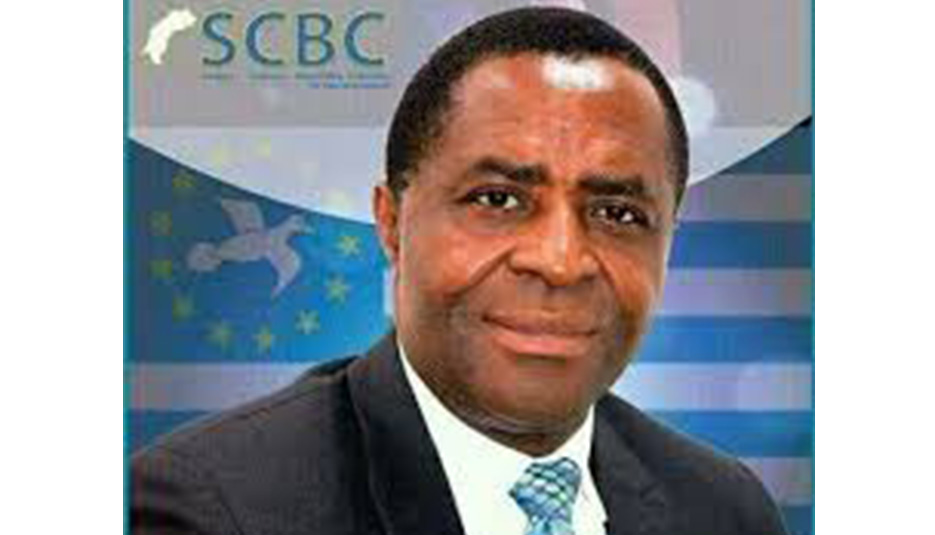
Op-ed: Sisiku Ayuk Tabe writes from jail again!
Dear brother and sisters,
Since it is becoming increasingly likely that the Yaounde regime of LRC will eventually concede and accept mediated talks, attached is a correspondence we sent to the UN. Our team here in detention, at the Yaounde Principal Prison, had brainstormed and came up with a proposal for dialogue. Attached is the proposal which we hope you all will treat as a base document, for any such dialogue. Please consider it as work in progress and revert with ideas to enrich it.
We must all realise that at the end of the day, we will all be called to be on the same side of the table against the system in LRC. It is our hope that we understand our differences and work in the general interest of the 8 million Ambazonians.
We have a common destiny to Buea. This struggle is bigger than any one of us and we must put our nation first.
Proposal for talks to end the political conflict between The Southern Cameroons and La Republique du Cameroun.
The struggle for the restoration of the statehood of the former United Nations (UN) Trust Territory of British Southern Cameroons (aka Ambazonia) has always been peaceful, and its leadership from Fon Gorji Dinka, (through Cameroon Anglophone Movement (CAM), All Anglophone Conference (AAC), Southern Cameroons National Council (SCNC) to date, has emphasized over time its commitment to a peaceful and diplomatic resolution of the political problem.
“The Force of Argument: Not the Argument of Force”, has and still is the motto of the struggle, in spite of Yaounde’s persistence in the use of excessive force, against peace-loving and law-abiding Southern Cameroonians imbued with a democratic culture, to keep them subjugated.
President Biya’s November 30, 2017 declaration of a genocidal war, instead of responding to broad-based peaceful demonstrations and for dialogue, is eloquent proof of his determination to exterminate the people in order to maintain his annexed and occupied territory. As declared by the UN, annexation is a crime against humanity and threat to world peace.
It is in this light that the leadership of Ambazonia, though incarcerated in la Republique du Cameroun’s maximum security prison, Kondengui, Yaoundé, (another concrete proof of opposition to peaceful resolution of the political conflict) decided to reflect on the urgent need for the UN to intervene and end annexation and restore the sovereign statehood of British Southern Cameroons (Ambazonia) in conformity with its inherited international boundaries and national rights as enshrined in the UN Charter and other international instruments.
The Proposed Talks to end The Political Conflict should, among others, deliberate on the following:
1) Origin and basis of the conflict 2) Scope of the conflict (problem)
3) Parties to the Talks 4) Conditions for Talks 5) Delegations to the Talks
Venue Issues: Origin And Basis Of The Conflict.
The ongoing political conflict is the outcome of the 1961 botched decolonization process of the former UN Trust Territory of British Southern Cameroons. The reasons for this are found in the non-respect by the United Nations (UN) of various provisions of its own charter and other international instruments.
The failure by the United Nations (UN) to respect and apply Article 76(b) of its Charter and also the Trusteeship Agreement, both of which spell out clearly self-government and independence for all Trust Territories, meant that the Southern Cameroons (Ambazonia) graduated from trusteeship to annexation and colonial occupation by la Republique du Cameroun.
Not also respected was the United Nations General Assembly (UNGA) Resolution 1514 of December 14, 1960 which also provided for the right to Independence without preconditions and reservations of all dependent territories and peoples to enable them enjoy complete freedom.
Worse, still, UNGA Resolution 1608 of April 21, 1961 that set up a tripartite committee to discuss the coming together of La Republique du Cameroun and the British Southern Cameroons as Two (02) States Equal in Status, to create the Federal United Cameroon Republic, was not implemented, thereby facilitating the annexation and colonial occupation of the territory by La Republique du Cameroun which gained independence from France on January l, 1960.
The absence of a Union Treaty between la Republique du Cameroun and the Southern Cameroons in accordance with Article 102 of the UN Charter, therefore testifies beyond doubt that there was no federal union formed and that the Southern Cameroons was under the threat of use of force annexed and occupied in 1961 by La Republique du Cameroun with international complicity.
FOR A PERMANENT SOLUTION To solve the political conflict highlighted above, talks should have as ultimate objective to right the wrongs of 1961 that led to the annexation and colonial occupation of the British Southern Cameroons by La Republique du Cameroun that is the restoration of the statehood of the Southern Cameroons.
It is also expected that in conformity with the Anglo-French Boundary Treaty of 1939, the principle of international jurisprudence of uti possedettis juris and the critical date, the African Union (AU) Constitutive Act, Article 4(b) and other relevant international instruments, La Republique du Cameroun should unconditionally renounce its claimed sovereignty over British Southern Cameroons (Ambazonia) and recognise the inherent right of British Southern Cameroons (Ambazonia) to sovereignty and self existence according to the will of the people and as enshrined in the UN Charter and other international instruments.
Scope of The Problem.
Issues of self-determination are either internal (national) or external (international) in scope. Having determined the root-causes of the problem to be the violation of International Instruments, and foreign aggression and having also determined the solution we seek to be restoration of statehood, the solution of the problem therefore falls within the UN mediation.
References and inspirations are drawn from the resolution of similar political conflicts around the world such as East Timor vs Indonesia, Namibia vs South Africa, Eritrea vs Ethiopia, and even South Sudan vs Sudan. We therefore expect the resolution of the Ambazonian political conflict with La Republique du Cameroun to follow the same international involvement and method for a permanent solution.
Parties to The Talks.
The parties to the talks should obviously be the following; La Republique du Cameroun, Southern Cameroons/Ambazonia, The United Nations Organisation officiating as the natural umpire and Foreign observers. Concerning organisations and countries that could have observer status during the Talks, the following are proposed;
The United Kingdom (former Trusteeship Administering Authority), and France, (the Administering Authority of former French Cameroun) stand out as STAKEHOLDERS, having been involved with the miscarriage of the Southern Cameroons independence;
The African Union whose Commission in the Banjul had earlier (2009) passed a ruling on the matter, The Commonwealth of Nations (to which Southern Cameroons would have automatically been a member), that has offered its good offices to mediate;
The European Union which has also offered to mediate; ECOWAS, the Sub-regional economic bloc Ambazonia intends to join; vi) Nigeria, Ambazonia’s only other land neighbour apart from La Republique du Cameroun; vii) United States of America (USA) viii) Ghana ix) South Africa x) Algeria xi) Russia xii) Rwanda xiii) Germany.
Conditions for Talks.
These are needed to create an enabling environment for effective and efficient Talks. The following dispositions if implemented will create such an atmosphere;
Unconditional cessation of hostilities and complete withdrawal of all occupation forces by La Republique du Cameroun that declared and is presently prosecuting this genocidal war against the peace-loving people of the Southern Cameroons;
Release of all detainees, war deaths and the handing over of the same to the United Nations with an accurate head count and recording;
Observation of a ceasefire by both parties; Withdrawal of colonial administrators; Governors, Senior Divisional Officers and Divisional Officers; Withdrawal of all la Republique du Cameroun colonial civil servants.
The withdrawals in (a), (d) and (e) above, will ensure that talks do not collapse because a colonial officer gave contradictory orders that can cause renewed conflagrations; The moving into Southern Cameroons (Ambazonia) of a UN Peace Keeping Force.
Delegations to The Talks
The feuding parties, La Republique du Cameroun and Ambazonia shall have an equal number of delegates to the Talks.
Venue.
For the safety and security of participants and sanity of the Talks, it is proposed that this should take place in a neutral territory, away from La Republique du Cameroun and Ambazonia. To this end, any of the following locations may be considered; New York-UN, Geneva-UN, Addis Ababa-AU.
Issues for the Talks.
To ensure peace, peaceful separation and good neighbourliness between the two belligerents, the Talks should among other things, be centred on; Political issues; Economic issues; Socio-cultural issues.
Conclusion.
The struggle for the restoration of Ambazonian statehood reaffirms the commitment of its people to solemn respect of the International instruments and a peaceful resolution of the ongoing political conflict with La Republique du Cameroun under UN mediation, as was done in Namibia, East Timor, Eritrea, etc.